Why "small" keeps getting mistaken for "less"
Almost every couple who enquires about a small wedding here says some version of the same thing before they say anything else: they are worried it will feel like they gave something up. Fewer guests, smaller budget line, smaller day, so the assumption goes.
It is not true, and it has never been true here, but it is worth saying plainly, because it is the single biggest hesitation standing between a couple and the day they actually want. A wedding for ten or twenty people is not a discount version of a wedding for a hundred and fifty. It is a different kind of day, built for a different kind of couple, and it comes with its own, very deliberate, kind of production value.
The couples who end up here are not the ones who could not afford a bigger wedding. They are the ones who worked out, often quite early in their engagement, that a bigger wedding was never going to give them what they actually wanted.
What we actually hear from couples
We pay close attention to how couples describe what they are looking for, because it tells us far more than any trend report. The phrases repeat, again and again, in enquiries:
- "I don't want a template or cliché wedding."
- "I can't afford to go overseas and have a European style wedding, and then I found this."
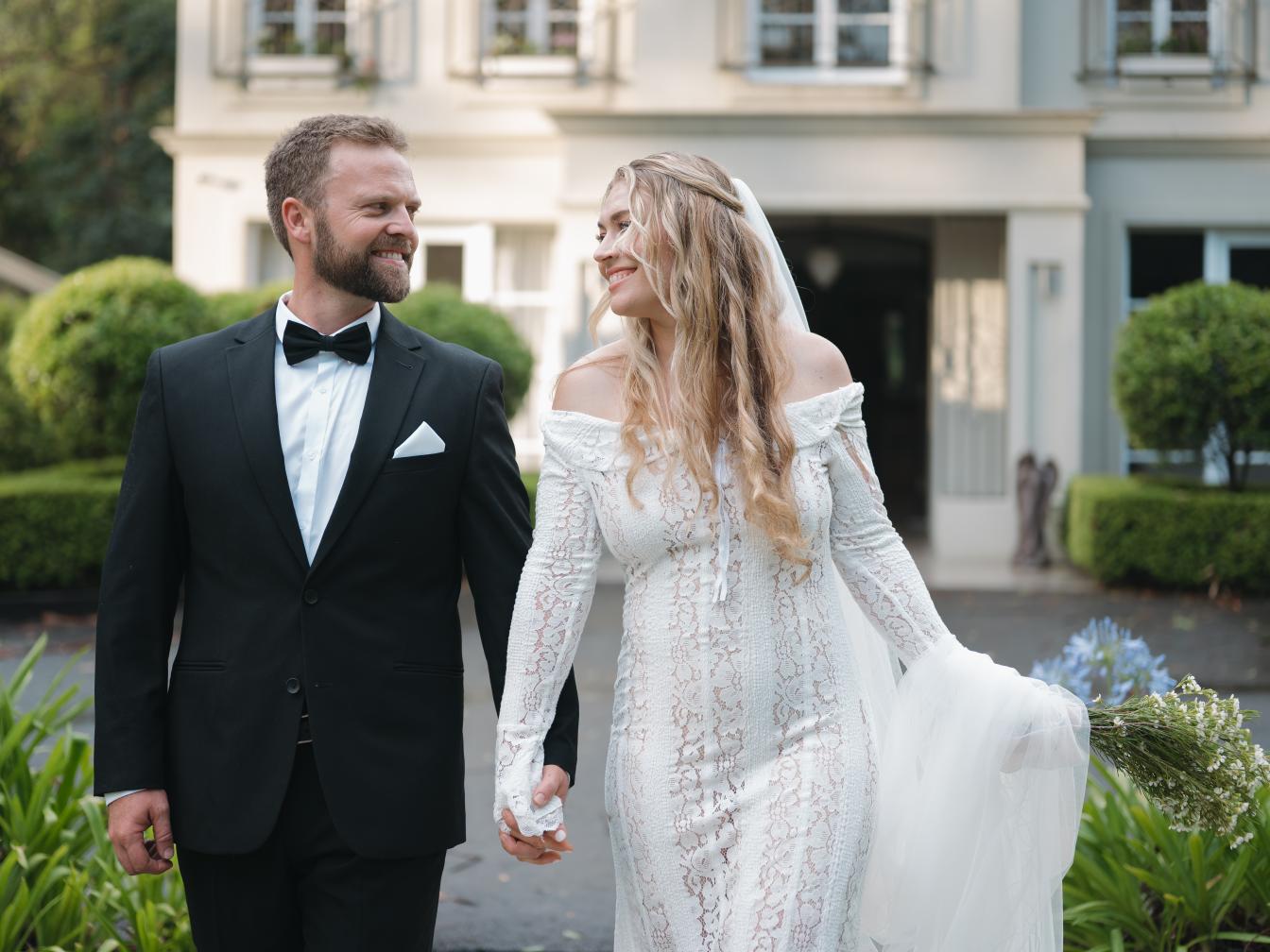
- "We were attracted to the editorial style photos you can take here."
- "I want the day to feel more relaxed."
- "I love reading, and the library won me over."
- "We love cars, and being able to have cars here is important to us."
None of these are requests for less. They are requests for something specific. A couple who says this is usually further along in their planning than they realise, they have already ruled out the reception hall, the set-menu package, the photo list that looks like everyone else's. What they are looking for now is a venue and a day that can actually hold what they have pictured, whether that is a car parked out front for the shot they screenshotted, or an afternoon that photographs like a European trip they could not otherwise justify.
The worry underneath the question
For couples who already know they want to elope, this rarely comes up. They know they want to be married, they know who they want in the room, and the decision is genuinely straightforward.
For couples weighing up a micro or intimate wedding instead of a traditional one, the hesitation sits somewhere else. It is not really about the guest count. It is the worry that a smaller day will feel thinner, more thrown together in the moment, more structured around what is easy to manage than what the couple actually wants. Will there be room for people to move around, or will thirty guests feel like they are trapped at a dinner party that goes too long. Will it still feel like a wedding, or will it feel like the wedding they were talked out of.
That worry deserves a straight answer. A smaller guest list does not mean less freedom in how the day comes together, it means more. There is no fixed run sheet forcing speeches at a certain hour or dancing after dinner whether anyone wants to or not. The day moves at the pace the couple actually wants, because there is no room full of competing needs to manage around.
Small is a decision, not a fallback
Here is the distinction that matters. A couple choosing an intimate wedding of thirty or forty guests is not settling for a smaller version of a big day. A couple choosing to elope with up to ten people they love most is not skipping a wedding. Both are choosing a format on purpose, because it lets them keep the parts of a wedding day that mean something and let go of the parts that never did.
Guests who genuinely know the couple. A ceremony where every seat has a reason for being filled. A reception that feels like a long lunch with the people you actually like, not a schedule of formalities performed for a room of acquaintances. That is not a compromise. For a lot of couples, it is the entire point.
What a day built around just you actually looks like
On a small wedding day here, the morning does not feel like a countdown, it feels like the celebration has already started. Family and bridal party gather in the getting-ready spaces, make tea, sit together, because the estate is a whole home and there is room for everyone to be part of the morning rather than waiting somewhere out of the way. By the time the ceremony begins in the afternoon, the day already has its own momentum, and every part of the setting, chairs, tables, the ceremony itself, has been chosen by the couple rather than pulled from a standard list.
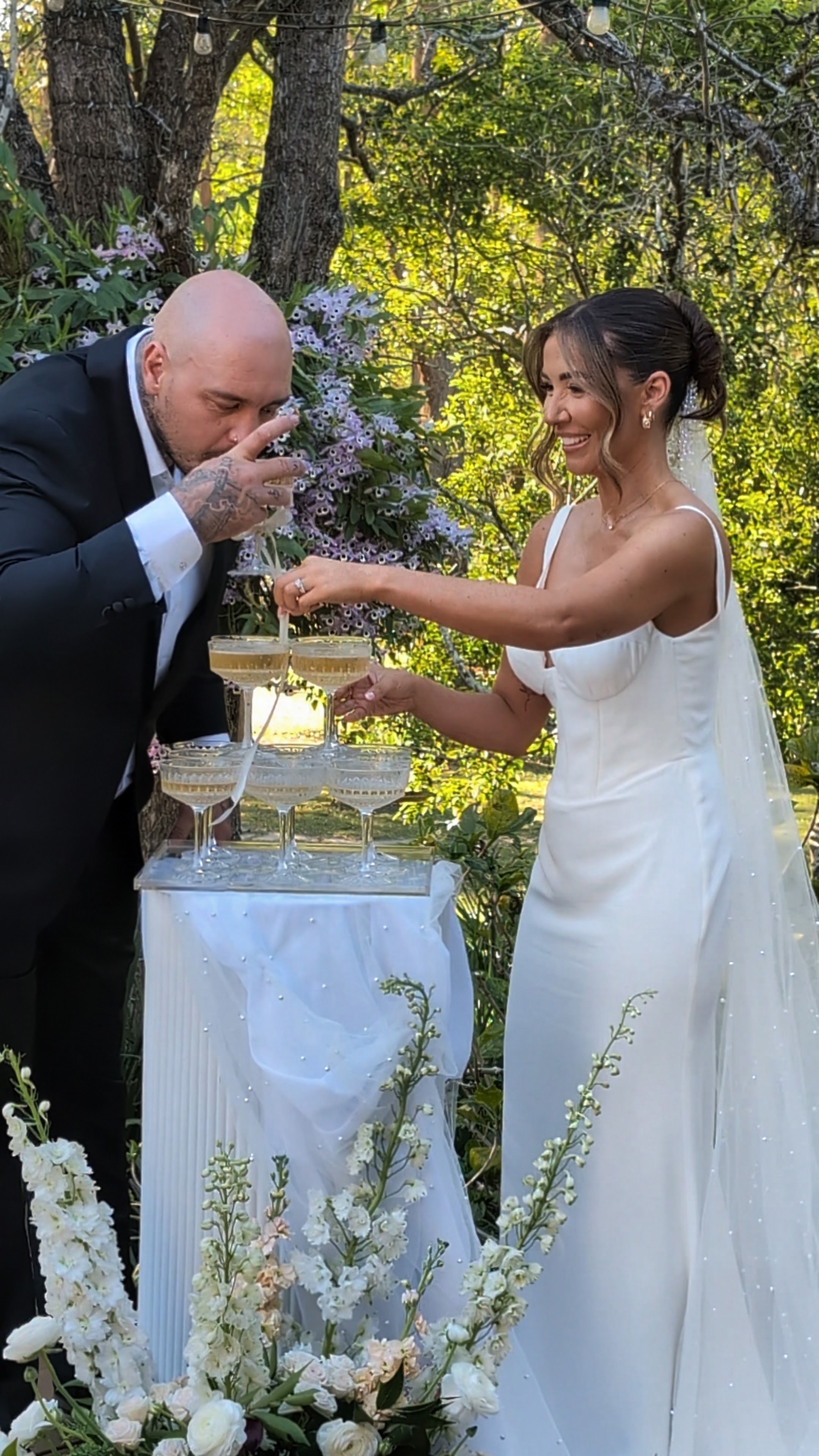
The evening runs the same way, on its own terms rather than a fixed order of events. If someone wants to stand up and speak, they can. If a couple wants a playlist instead of a band, or a dessert table instead of a traditional cake, that is simply what happens. Nothing about a smaller guest count means less attention, it usually means more, because the team can spend the whole day checking in on the couple directly rather than managing a room from a distance.
The styling difference nobody tells you about
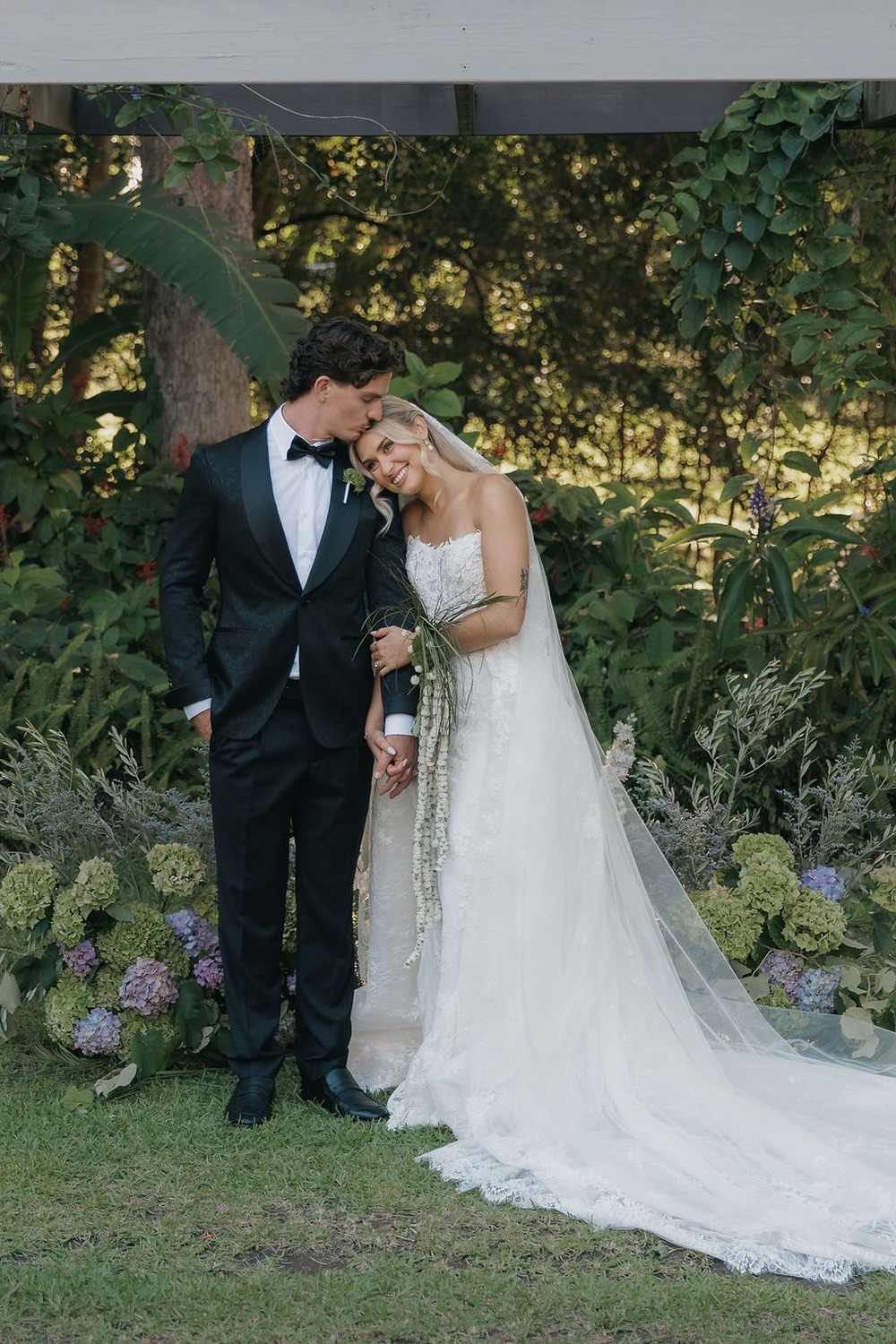
People often assume styling a small wedding means the same florals and furniture, just fewer of them. In practice, it works the other way. A smaller ceremony space is more flexible, not less, chair styles can change entirely from one wedding to the next, and some couples skip built floral arrangements altogether in favour of abundant potted plants, letting the garden do the visual work instead.
Tablescapes lean the same way. Because the Orangerie already carries its own greenery, the styling that works best often stays simple on purpose, candles, a few flowers, lemons, fruit, using what is already there rather than adding more on top of it. A reception can be set as two long tables for dinner, then cleared to an open dance floor within the hour. Every wedding ends up with its own shape, because it is built around the couple in front of us, not a package scaled down to fit them.
The day people describe afterwards
What every couple actually wants, whatever size their wedding, is for the people there to leave saying the day felt unmistakably theirs, not a version of somebody else's. That is a harder thing to build at scale, when a hundred and fifty guests and a tight vendor schedule leave little room to improvise. It is closer to the natural result of a small one, where there is nothing standing between what the couple pictured and what the day actually becomes.
Frequently asked questions
Does a smaller wedding mean less styling or fewer photo opportunities? No. A smaller guest list usually means more flexibility in how a space is styled, not less, and more time for photography across the property rather than a rushed list of must-have shots.
How many guests count as an intimate or micro wedding? There is no fixed rule, but most couples planning an intimate wedding here are working with somewhere between ten and fifty guests, with elopements sitting at the smaller end of that range.
Will a small wedding still feel like a proper celebration? Yes. Ceremony, photography, a real sit-down meal, dancing if you want it, all still happen. What changes is how relaxed and personal the pacing feels, not whether those moments are there.
See what a template-free day actually looks like
If a day planned around the two of you and the people who actually matter sounds like what you have been picturing, the best next step is to see it in person. You can look through our wedding packages or book a private viewing to walk the estate and talk through your date.