Why long table receptions work so well for intimate weddings
If you have spent any time looking at wedding inspiration lately, you have seen it. One long table, running the length of a room or a garden, guests seated along both sides instead of scattered across a dozen round tables. It photographs beautifully, but the reason couples keep choosing it is not really about the photos. It is about how the evening actually feels.
Here is what a long table reception is, why it works so well for smaller guest counts, and what people tend to misunderstand about how the format actually fits into a wedding day.
What a long table reception actually is
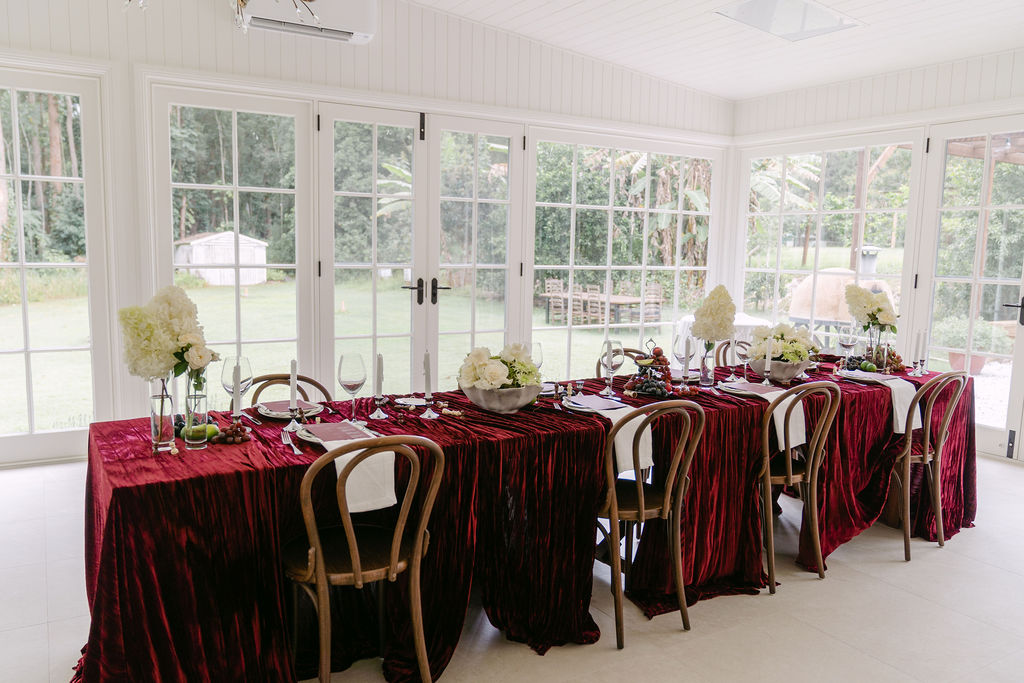
A long table reception replaces the traditional round-table layout with a single shared table, or occasionally two, running through the space. Everyone sits along it together rather than being split into groups of eight or ten at separate tables scattered around a room.
The format has roots in the kind of family-style dinner that predates modern wedding planning entirely. Think of a harvest dinner, a long lunch in the countryside, a table set outdoors under trees. It is not a new invention. It is a return to something simpler, which is part of why it feels so natural for a smaller guest list.
Why it suits small guest counts specifically
Round tables were built to solve a problem that only exists at scale. When you have 150 guests, you need a way to break that many people into manageable groups, so round tables of eight or ten became the standard. But that structure creates something else along with it: a room full of separate conversations that never quite meet.
With a smaller guest list, that problem does not exist in the first place, and a long table lets the format match the size of the celebration.
A few reasons it works so well when the guest count is small:
- One conversation instead of ten. At a long table, a toast, a story, a laugh travels the length of the table instead of getting lost at table six while table two never hears it.
- No head table hierarchy. Nobody is seated at a separate elevated table looking out at everyone else. The couple sits among their guests, which changes the whole tone of the evening.
- Everyone is genuinely included. There is no table near the kitchen, no table by the speakers, no table that got the short straw. Proximity is equal.
This is not a smaller version of a big wedding reception. It is a format that only really works once the guest list is small enough to fit around one table, which is exactly why it has become closely associated with intimate weddings rather than large ones.
The long table is the anchor, not the whole day
Here is the part that gets misunderstood. People sometimes picture a long table reception as guests seated for hours straight, from arrival to last drink, at one table for the entire evening. That is not usually how it works, and it is not the best version of the format either.
The long table works best as the centrepiece of an evening that has already moved through other spaces. Guests arrive for the ceremony somewhere else entirely, a garden, a courtyard, wherever the day begins. Photography happens across different corners of the property as the afternoon goes on. Drinks and canapes might happen in another spot again, somewhere guests can stand, move, mingle, before anyone sits down for the night.
By the time everyone finally takes their seat at the long table, the mood has already built across the afternoon. The meal becomes the moment the day settles, not the entire day itself. That distinction matters. A long table dinner that guests walk straight into from the car park feels very different from one they arrive at after a few hours spent somewhere else on the property first.
If you are choosing a venue with this format in mind, it is worth asking whether the space actually supports that movement. Is there a separate ceremony spot, a separate spot for drinks, somewhere different again for photos? A property with only one usable space will struggle to give the long table its proper weight as the evening's high point, because there is nowhere else for the day to have happened first.
Dinner party energy, not reception energy
A traditional wedding reception often runs on a tight formal structure. Entrees come out, speeches interrupt the main course, the timeline is managed in fifteen minute increments so nothing runs late. It works, but it rarely feels relaxed.
A long table dinner tends to run differently, closer to how a real dinner party unfolds. Courses arrive as the evening settles rather than on a rigid schedule. Conversation continues underneath the meal instead of being paused for it. Guests are not watching a clock, because there is no packed itinerary competing for the same hours.
This pacing is only really possible with a smaller guest list. Feeding 150 people a slow, unhurried, course by course dinner is a logistical challenge most venues cannot solve gracefully. Feeding twenty or thirty people that way is simply a dinner party, run beautifully.
What makes the format work in practice
A few practical details separate a long table that works from one that does not.
Seating that keeps sightlines open. Low florals and runners rather than tall centrepieces mean guests can actually see and talk to people across the table, not just beside them.
Service that matches the format. A long table suits plated courses or a private chef style dinner far better than a buffet. The rhythm of the meal is part of what makes the evening feel intentional, and a buffet line breaks that rhythm by pulling everyone up out of their seats at different times.
Enough width, not just length. A table that is too narrow makes passing dishes and platters awkward. Enough width for glassware, shared plates, and a bit of breathing room matters more than most people expect when planning the layout.
A setting that earns the moment. Because the long table works best as the evening's high point rather than the whole event, the space it sits in should feel like an arrival, not just the room guests happened to be in already.
Where this format lives well
A long table reception asks something of the property it sits on. It works best somewhere with more than one distinct space, a spot for the ceremony, somewhere separate for the afternoon, and then the table itself as the evening's destination, so guests genuinely feel the shift when they finally sit down.
For couples planning a smaller wedding on the Sunshine Coast, this is one of the reasons a private estate with a few distinct garden and dining areas tends to suit the format better than a single function room. The table becomes something guests walk toward as the day turns, not the backdrop for the entire afternoon.
If this is the kind of evening you are picturing, we would be glad to show you how it comes together in person. Book a private viewing.