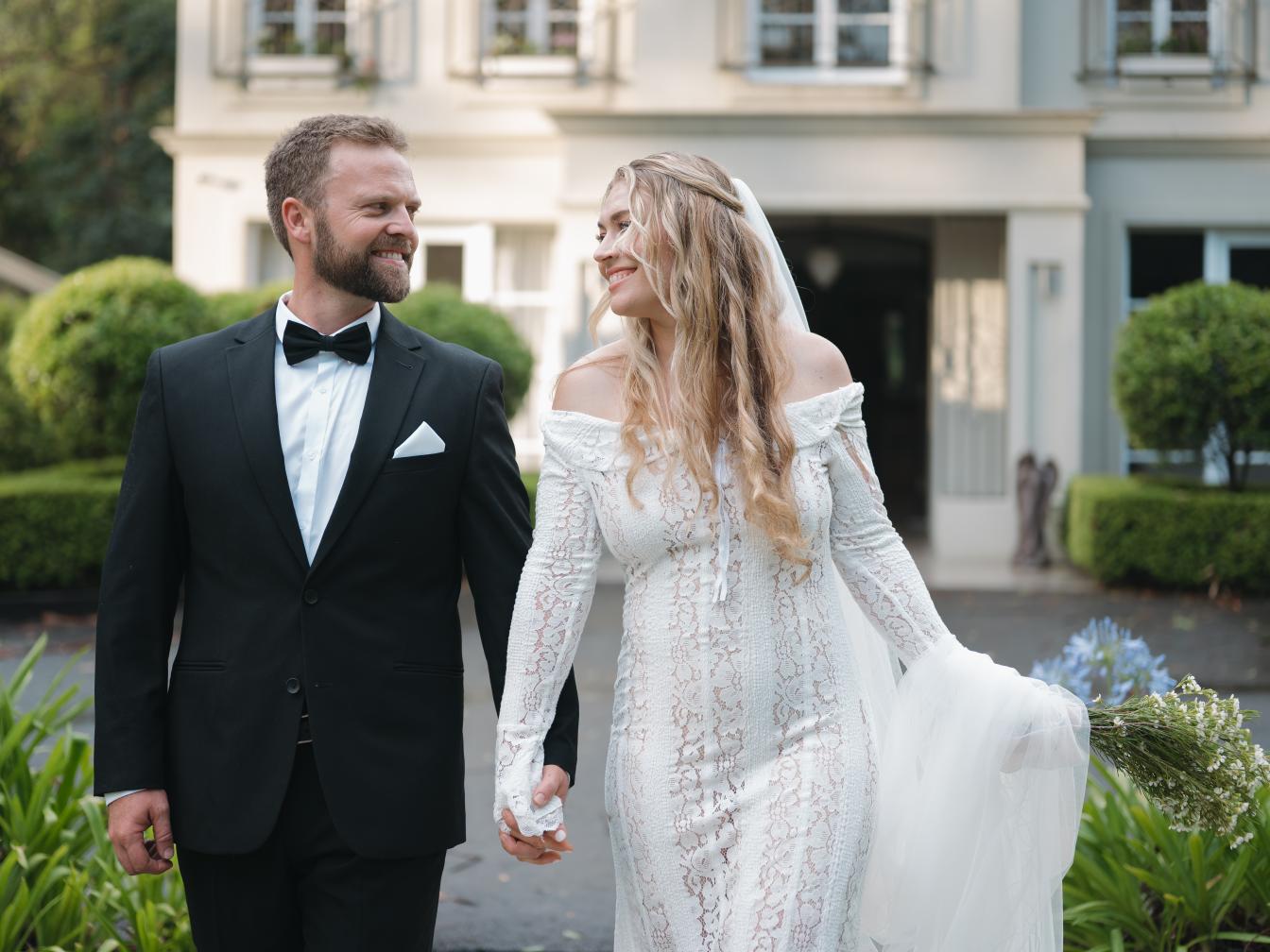
There's a reason couples keep coming back to the French aesthetic when they're planning an intimate wedding.
It doesn't shout. It doesn't overdo. It just settles into a room and makes everything feel simply chic.
But what actually makes it work, and what makes it fall apart?
It starts with restraint, not decoration
The most common mistake with French-inspired styling is treating it as a Pinterest mood board.
Lots of linen. Lots of candles. Lots of dried florals. The pieces are there, but without restraint, it tips into something that feels assembled rather than alive.
French aesthetic is about editing. You choose fewer things, but you choose them well.
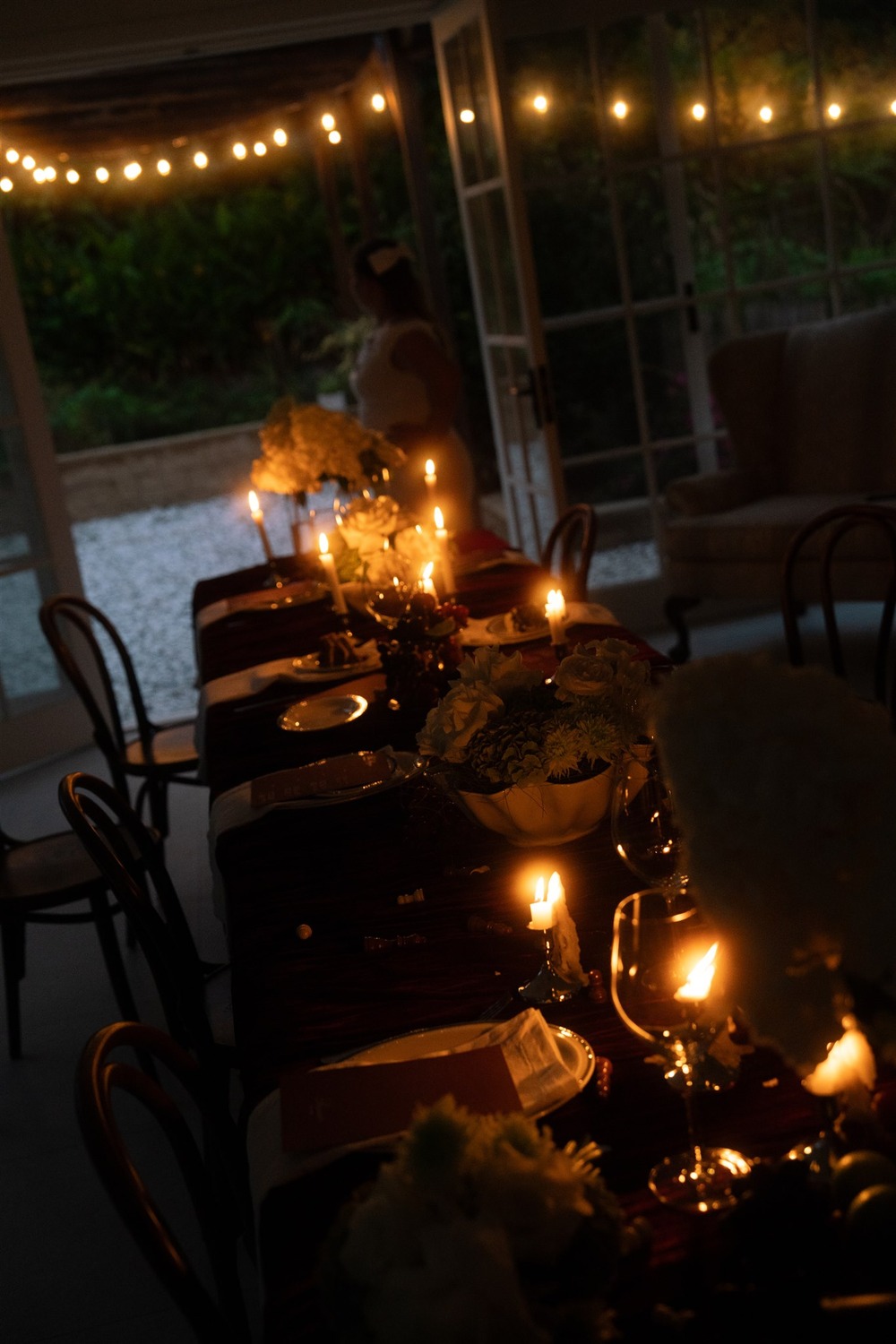
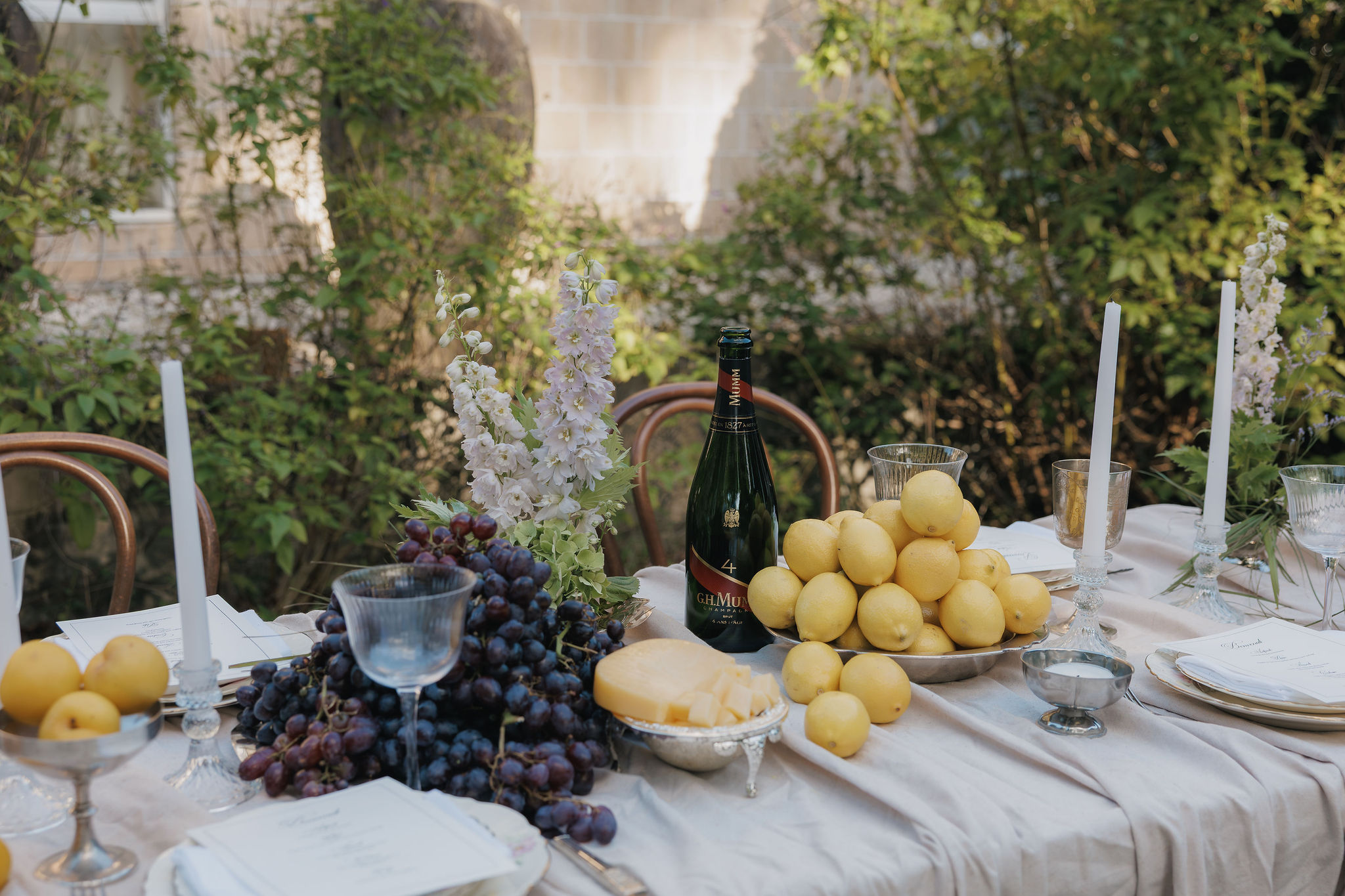
A single long table with cloth napkins and simple florals in muted tones will always read more beautifully than a room filled with props competing for attention.
The setting carries most of the weight
The French countryside aesthetic isn't something you bring to a venue. It's something that already exists in the bones of the right space.
Stone, aged timber, natural light, gardens with a little wildness to them, these elements do the work that no amount of styling can replicate.
When you're choosing a venue, ask what the space looks like with almost nothing in it. If the answer is beautiful, you're in the right place.
Colour palette is quiet
French-inspired palettes are built from things that already exist in nature: the inside of a linen shirt, dried wheat, old stone, dusty sage, the soft peach of a late afternoon sky.
The palette shouldn't ask for attention. It should feel like the colour has always been there.
Avoid anything high-contrast or overly saturated. The moment something is too bright, it pulls the eye away from the whole.
The table is the ceremony's equal
In French culture, the table is where connection happens. It's not an afterthought to the ceremony, it's an event in itself.
For intimate weddings especially, the reception table deserves as much thought as anything else. The glassware, the way the napkins fold, the weight of the cutlery, the flowers that feel gathered rather than arranged.
These are the details guests remember without knowing why.
Floristry that looks uncontrived
French floristry doesn't look like floristry. It looks like someone walked through a garden and gathered what was there.
Loose, slightly imperfect arrangements. Roses with their petals opening. Stems left long. Nothing pinned or forced.
The goal is abundance that still feels relaxed.
Flow matters as much as aesthetics
A French-inspired wedding day feels relaxing. Long lunches. Time between formalities. Guests who settle in rather than watching the clock.
The aesthetic doesn't work if the day is rushed. The softness of the styling needs a day that moves at the same pace.
This is why so many couples choosing this style are also choosing smaller guest lists and fewer transitions, because the experience needs space to breathe.
Why it suits micro weddings so well
When you have 20 to 50 guests, you can actually inhabit the aesthetic.
You can notice the light changing through the afternoon. You can spend real time at the table. You can hear every voice in the toast. The details you've carefully chosen aren't lost in a crowd, they're appreciated.
The French aesthetic isn't just a visual style. It's a philosophy about how a day should feel. Slow and full of the kind of beauty that doesn't announce itself.
The Singing Heart Estate is a private estate in the Sunshine Coast hinterland, designed for intimate weddings of 10 to 50 guests. If you're drawn to this style of day, you can explore our packages or book a private viewing at thesingingheart.com.au.